Skip to content
BuildClub — AI Built in Plain Sight

INDUSTRY · MINING & MATERIALS

AI on the work between the data room and the dig face.

Mining is being flooded with AI pitches — fleet systems, camera analytics, geological packages, each vendor selling its own box. BuildClub is not a vendor. We sell no software, take no commissions, and represent one interest: the owner's. We deploy AI inside your own tenant, on the workflows your investment team, geologists, asset managers, and site leadership actually run every day.

That means the reading-heavy work of the deal cycle — screening, technical due diligence, data-room review — and the reporting-heavy work of ownership and operations: exploration data, production reporting, plant performance, ESG documentation, and an independent, camera-based read on what is actually happening at site. Your geological packages, fleet systems, and ERPs stay exactly where they are.

Request a conversation →
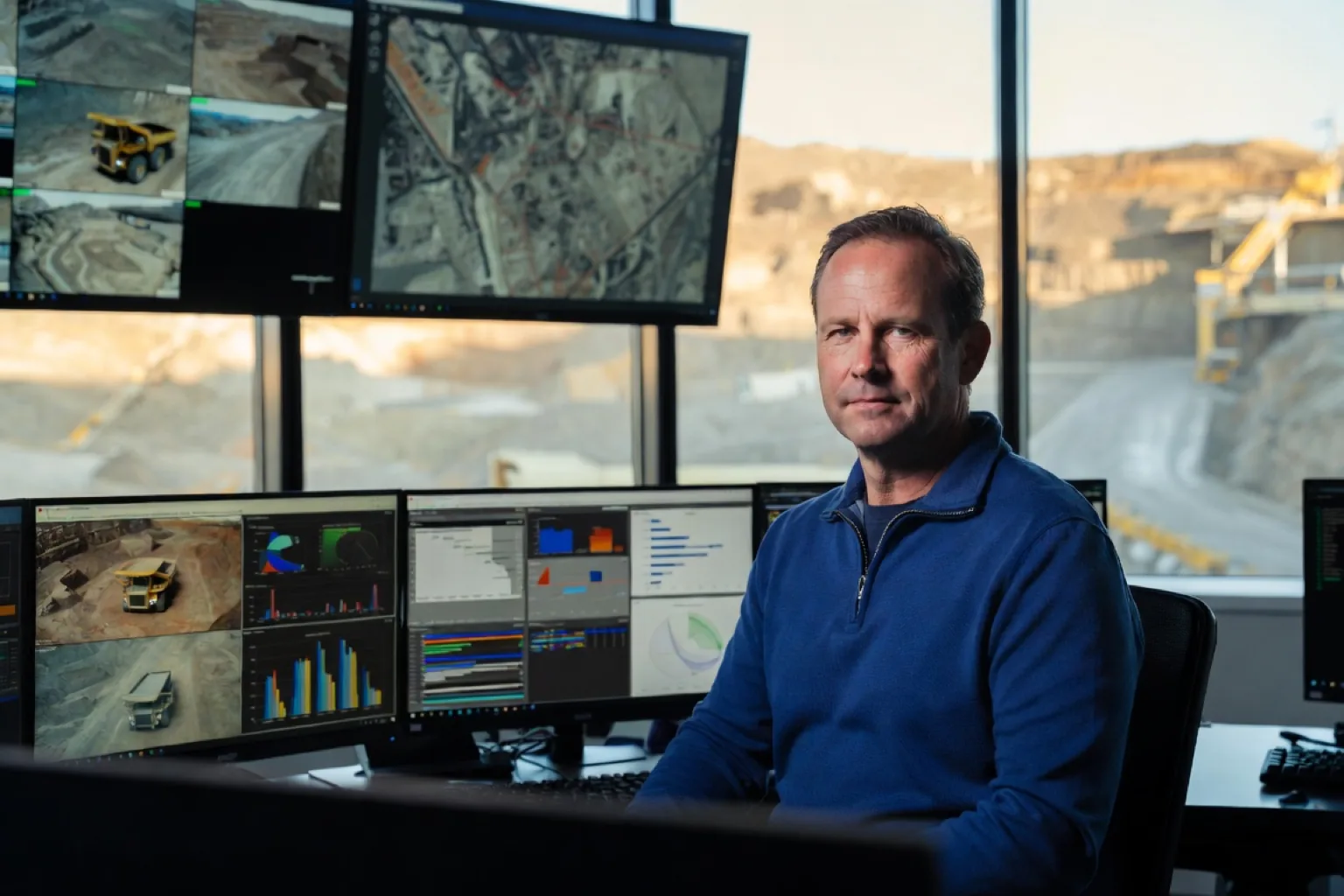
A mine operations supervisor at a multi-monitor workstation in a remote operations center, with live camera feeds of haul trucks, a site map, and production dashboards on screen and an open-pit mine visible through the windows.

Where the work actually breaks down in mining and materials

On the investment side, mining runs on documents. A rapid assessment means a small technical team reading teasers, NI 43-101 and JORC reports, drill databases, and data rooms measured in the thousands of pages — for every opportunity, including the many that get declined. The judgment is world-class; the reading is brutal. And the institutional memory of every deal the firm has ever screened lives in people's heads and old folders, which means the same lessons get re-learned each cycle.

On the operating side, the owner sees what the site reports. Production numbers are keyed into daily reports, aggregated weekly, packaged monthly — by the time a shortfall reaches the board pack, the quarter is gone. Meanwhile the cameras that already cover the pit, the plant, and the ROM pad watch everything and tell no one. The gap between what is reported and what is observable is where value quietly leaks: cycle times, fill factors, utilization, shift starts and ends.

The math is different from most industries. A single operational improvement at a single site is routinely worth seven or eight figures a year, and a single mis-read deal can cost a fund its vintage. Decision speed and independent verification are the levers that matter. AI is the first tool that both reads the technical corpus at machine speed and watches the site around the clock — provided someone deploys it on the owner's behalf rather than a vendor's.

Where AI clusters surface across the value chain

During Phase 0, the following task clusters surface again and again across mining investors, owner-operators, and services contractors. They are organized here by value-chain segment — the investment side first, then the operating side, then services.

Investment screening and due diligence

For investors, the deal cycle is a reading problem before it is a judgment problem. AI compresses the reading so the judgment gets more at-bats.

Deal screening and rapid assessment

What's manual today

A small technical team reads teasers, technical reports, and data rooms for every opportunity. Most are declined — after days of expert reading each.

Task cluster opportunity

Data-room extraction agents. Technical-report summarization against the house checklist. Red-flag screens that surface the kill factors first.

Technical due diligence

What's manual today

Geologists and engineers re-read resource models, drill results, and feasibility studies page by page. Cross-referencing claims against source data is slow — and it is exactly where errors hide.

Task cluster opportunity

Claim-to-source verification. Drill-database interrogation. Consistency checks across the geology, metallurgy, and financial-model chapters of a data room.

Market and commodity intelligence

What's manual today

Analysts compile news, filings, price moves, and technical reporting by commodity and geography — every morning, by hand.

Task cluster opportunity

Automated daily intelligence briefs by commodity, geography, and portfolio relevance, with deduplication and change tracking.

Portfolio and board reporting

What's manual today

Monthly packs are assembled by hand from site reports, spreadsheets, and email threads. Asset managers spend days formatting instead of interrogating.

Task cluster opportunity

Automated reporting packs. Variance-narrative drafting. Same-numbers-everywhere consistency checks across site, fund, and board views.

Exploration and geology data

Exploration produces some of the most valuable and worst-organized data in the business. Decades of drilling live in inconsistent databases, PDF logging sheets, and departed geologists' folders.

Drill data consolidation

What's manual today

Historical drill campaigns sit across formats, naming conventions, and generations of software. Consolidating them for a resource update or a divestment data room is a months-long manual project.

Task cluster opportunity

Drill-database cleanup and standardization agents. Legacy log digitization. Data-room preparation from the geology archive.

Geological review and targeting support

What's manual today

Geologists cross-read logs, assays, geophysics, and historical interpretations to form targeting views — and to evaluate the growing field of AI-targeting vendors.

Task cluster opportunity

AI-assisted review of geological evidence with citations back to source data. Independent evaluation and backtesting of third-party targeting tools before they touch your data.

Technical reporting

What's manual today

Contributing authors assemble NI 43-101 / JORC chapters, reference lists, and QA/QC appendices by hand under deadline.

Task cluster opportunity

Drafting support for competent-person teams — assembly, cross-referencing, and consistency checking. The qualified professionals still make every technical call.

Mine operations and data collection

Owners see what operators report. The site's cameras and sensors see what actually happened. Closing that gap is the highest-leverage data-collection project in mining — and it starts with infrastructure you already own.

Production reporting

What's manual today

Shift data keyed into daily reports, re-keyed into weekly summaries, re-summarized for the monthly pack. Every hop loses detail and adds delay.

Task cluster opportunity

Automated production reporting from source systems. Variance narratives drafted for review, not written from scratch.

Site operational truth

What's manual today

The cameras that already cover the pit, plant, and ROM pad watch everything and report nothing. Utilization, cycle times, and shift discipline are known anecdotally.

Task cluster opportunity

Computer-vision level-checks on existing cameras — dig cycles, haul cycles, load counts — reconciling observed activity against reported numbers. Vendor-neutral: we specify, evaluate, and deploy on your behalf.

Short-interval control

What's manual today

Supervisors discover problems at shift end, or at the weekly meeting.

Task cluster opportunity

Real-time alerting on deviations the cameras and site systems can already see — blocked conveyors, idle equipment, missed shift starts.

Maintenance documentation

What's manual today

Work orders, inspection notes, and failure histories are written inconsistently and searched never.

Task cluster opportunity

Maintenance-history search and summarization. Failure-pattern digests for planning meetings.

Processing and plant

The plant is the most instrumented part of a mine and often the least explained. The data exists; the narrative connecting recovery, throughput, and cost rarely does.

Metallurgical accounting and reconciliation

What's manual today

Reconciling mined grade, plant feed, recovery, and concentrate across systems is a monthly spreadsheet exercise with judgment calls buried in cells.

Task cluster opportunity

Reconciliation agents that flag where mine-to-mill numbers diverge and draft the explanation for the metallurgist to confirm.

Plant performance reporting

What's manual today

Shift and daily plant reports are compiled by hand from historian data and operator logs.

Task cluster opportunity

Automated plant reporting from historian exports. Downtime categorization and trend digests.

Visual monitoring in the plant

What's manual today

Belt condition, particle size, blockages, and spillage are checked by walkdowns and luck.

Task cluster opportunity

Camera-based monitoring on existing CCTV — belt state, particle size alerts, blockage detection — deployed vendor-neutrally.

ESG, permitting, and compliance

Every lender, LP, and regulator asks a slightly different version of the same question. Answering from a governed library instead of a blank page is the difference between days and minutes.

DDQ and LP reporting

What's manual today

ESG questionnaires and lender requests are assembled manually across sites and funds, each one slightly different.

Task cluster opportunity

DDQ response drafting from a governed answer library, with every answer traceable to source documentation.

Permit and obligation tracking

What's manual today

Permit conditions, commitments, and reporting deadlines live in PDFs and calendars. Misses are found by regulators.

Task cluster opportunity

Obligation extraction and tracking from permits and agreements. Deadline and condition alerting.

Incident and safety documentation

What's manual today

Incident reports are written under pressure, filed inconsistently, and rarely mined for patterns.

Task cluster opportunity

Drafting support for incident documentation. Cross-incident pattern summaries for safety reviews.

Contract mining and services

For contractors and EPCM firms, the margin is made or lost on paperwork: progress claims, variations, daily diaries, tenders. Engineering hours are consumed by writing that AI can draft.

Progress reporting and claims

What's manual today

Monthly claims and progress reports are assembled from site data, diaries, and photos — under contract deadlines, by engineers.

Task cluster opportunity

Progress-report drafting from site data. Claims and variation documentation gathering, with the evidence trail attached.

Tender responses

What's manual today

Every tender restarts from the last one that someone can find.

Task cluster opportunity

Tender-response first drafts from the estimating library and past submissions. Compliance-matrix extraction from tender documents.

Daily diaries and site records

What's manual today

The contractual record of what happened each day is handwritten, inconsistent, and disputed later.

Task cluster opportunity

Structured daily-diary drafting from site inputs. Searchable site-record archives for dispute support.

How the BuildClub Method applies to mining

Phase 0 in mining

Phase 0 starts wherever your money is decided — the investment committee, the asset-management desk, or the site GM's Monday meeting. We interview across the investment team, technical specialists, asset managers, and site leadership, map task clusters, and quantify the hours and decision latency in each. The output is a ranked 12-month roadmap. In mining it connects to two lines at once: deal-cycle speed on the investment side and site EBITDA on the operating side.

Phase 1 in mining

Phase 1 deploys the AI tool stack — Claude, Copilot, and the function-specific tools that survive our evaluation — inside your own tenant, with proper admin controls and security review. Training runs cohort by cohort: investment team, geologists and engineers, asset managers, finance, legal. Where the Company Brain is engaged (separately scoped, standalone knowledge layer), it ingests your deal history, technical library, and reporting archive — so "have we seen this ore body story before?" is answered from your own record, not from memory.

Phase 2 in mining

Phase 2 deploys agents on the clusters Phase 0 ranked highest — screening, intelligence, reporting — and, where site operations are in scope, stands up the camera-based operational layer with the vendor best suited to your sites. We act as the owner's representative in that selection: we hold no reseller agreements and take no commissions, so the evaluation serves your interests, not a sales channel.

A typical engagement in mining

Composite example — illustrative of typical engagements, not based on a single client.

A mining-focused investment firm with a multi-asset portfolio across several jurisdictions. The sponsors are a partner and the head of asset management. The presenting pain is the reading load of the deal cycle, a morning intelligence routine assembled by hand, and monthly portfolio packs that consume the asset-management team's week.

Phase 0 interviews run across the investment team, technical specialists, asset managers, finance, and legal. Three clusters rank highest. First, screening — expert hours spent reading opportunities that are ultimately declined. Second, market and commodity intelligence — the same morning compilation, every day, by hand. Third, reporting — packs assembled from site reports and spreadsheets rather than interrogated for what changed and why.

Phase 1 deploys the tool stack inside the firm's own tenant with security review, and training runs cohort by cohort from the investment committee to the front office. Where the Company Brain is engaged, it ingests the firm's deal records and technical library, so past screening decisions become a searchable asset rather than folklore.

Phase 2 automates the daily intelligence brief and the reporting packs, deploys screening agents against the house checklist, and pilots a camera-based operational layer at one site — reconciling observed dig and haul cycles against reported production. Illustrative outcome: reading time on declined deals cut sharply, the morning brief produced before the team sits down, and reporting time redirected from assembly to analysis. The firm owns the agents, the Brain, and every line of configuration.

What BuildClub is not in mining

Not a mining software vendor. Your geological modeling, mine planning, and fleet systems — Vulcan, Leapfrog, Deswik, or whatever your sites run — stay exactly where they are. We deploy AI on the work between and above those systems: the reading, the reconciliation, the reporting, the correspondence.

Not a camera or sensor company. When site vision AI is the right answer, we specify it, run the bake-off, negotiate the data rights, and manage the deployment as your representative. We hold no reseller agreements and take no commissions — and if a tool is not ready, the evaluation says so.

Not an engineering consultancy. We do not sign off resources or reserves, and we do not replace competent-person work. We work alongside your technical advisors and make their reading, checking, and reporting dramatically faster.

Who in mining BuildClub serves

Mining investors and PE funds

Partners, the investment team, and the head of asset management. The presenting pain is the reading load of the deal cycle, the hand-assembly of portfolio reporting, and the gap between what sites report and what is actually happening on the ground. They have world-class technical judgment; they want it spent on decisions, not document handling.

Mine owners and operators

General managers and operations leadership. The pain is a manual reporting chain — production truth keyed into daily reports and aggregated late — and camera infrastructure that watches everything but reports nothing. They want operational visibility without another platform migration.

Mining services contractors and EPCM firms

COOs and commercial directors. The pain is documentation: progress reports, daily diaries, claims and variations, tender responses. Engineering hours are consumed by writing that AI can draft, in businesses where the margin is made or lost on exactly that paperwork.

Ready for an independent read on AI across your mining business?

Tell us where the friction is — deal screening, technical DD, exploration data, site operations, plant, or ESG — and we'll identify whether Phase 0 · Assess is the right starting point.

Request a conversation →